


If your doctor has recommended thyroid surgery, you’re probably searching for answers to questions like “Is thyroid surgery safe?”, “When do I really need surgery?”, “Will I need lifelong medication?”, or “How long is the recovery?” You’re not alone. These are some of the most commonly searched questions by people diagnosed with thyroid nodules, goitre, thyroid cancer, or an overactive thyroid.
The good news is that thyroid surgery is a safe and highly successful procedure when performed by an experienced endocrine and ENT surgeon. Modern techniques have also made recovery faster, with less pain and improved cosmetic results.
If you are considering Thyroid Surgery in Bangalore, understanding why surgery is needed, what happens during the procedure, and what recovery looks like can help you make an informed decision. At Svastii Advanced ENT & Thyroid Centre, patients receive personalized care using advanced surgical techniques from experienced specialists.
What Is Thyroid Surgery?
Thyroid surgery, also known as a thyroidectomy, is a procedure performed to remove part or all of the thyroid gland. The thyroid is a butterfly-shaped gland located in the front of the neck and plays an important role in controlling metabolism, energy levels, heart rate, and body temperature.
Depending on your condition, your surgeon may recommend:
Partial Thyroidectomy
Only the affected portion of the thyroid gland is removed.
Total Thyroidectomy
The entire thyroid gland is removed when necessary.
The choice depends on the underlying thyroid condition, imaging findings, biopsy results, and overall health.
Why Is Thyroid Surgery Needed?
Not every thyroid problem requires surgery. Many thyroid conditions can be managed with medication and regular monitoring.
However, surgery may be recommended if you have:
Large Thyroid Nodules
Large nodules that cause difficulty swallowing or breathing.
Thyroid Cancer
Surgery is the primary treatment for most thyroid cancers.
Suspicious Biopsy Results
When tests cannot rule out cancer.
Large Goitre
An enlarged thyroid gland causing pressure symptoms or cosmetic concerns.
Hyperthyroidism
An overactive thyroid that cannot be controlled with medicines or radioactive iodine.
Your surgeon will carefully evaluate your condition before recommending Thyroid Surgery in Bangalore.
What Are the Symptoms of Thyroid Disease?
Symptoms vary depending on the underlying condition.
Neck Swelling
One of the most common signs of thyroid enlargement.
Difficulty Swallowing
Large thyroid nodules may compress the food pipe.
Hoarseness of Voice
Changes in the voice should always be evaluated.
Difficulty Breathing
Very large goitres may press against the windpipe.
Unexplained Weight Changes
Both weight gain and weight loss may occur depending on thyroid function.
Fatigue
Thyroid hormone imbalance often causes persistent tiredness.
Palpitations
An overactive thyroid may increase heart rate.
If these symptoms persist, consult an experienced specialist for evaluation.
What Causes Thyroid Problems?
Several conditions can affect the thyroid gland.
Thyroid Nodules
Most nodules are benign, but some require further investigation.
Goitre
The thyroid enlarges due to iodine deficiency or hormonal imbalance.
Thyroid Cancer
Although relatively uncommon, early diagnosis offers excellent treatment outcomes.
Graves’ Disease
An autoimmune condition causing excessive thyroid hormone production.
Hashimoto’s Thyroiditis
An autoimmune disease leading to reduced thyroid function.
Identifying the exact cause helps determine whether surgery is necessary.
How Is Thyroid Disease Diagnosed?
Diagnosis usually involves several investigations.
Clinical Examination
Your doctor examines the thyroid gland for swelling or nodules.
Ultrasound Scan
Provides detailed images of the thyroid.
Thyroid Function Tests
Blood tests measure hormone levels.
FNAC
Fine Needle Aspiration Cytology helps evaluate thyroid nodules.
CT Scan
Recommended in selected patients with large goitres.
These investigations help determine the most appropriate treatment plan.
What Happens During Thyroid Surgery?
Many patients are surprised to learn that thyroid surgery is a well-established procedure with excellent success rates.
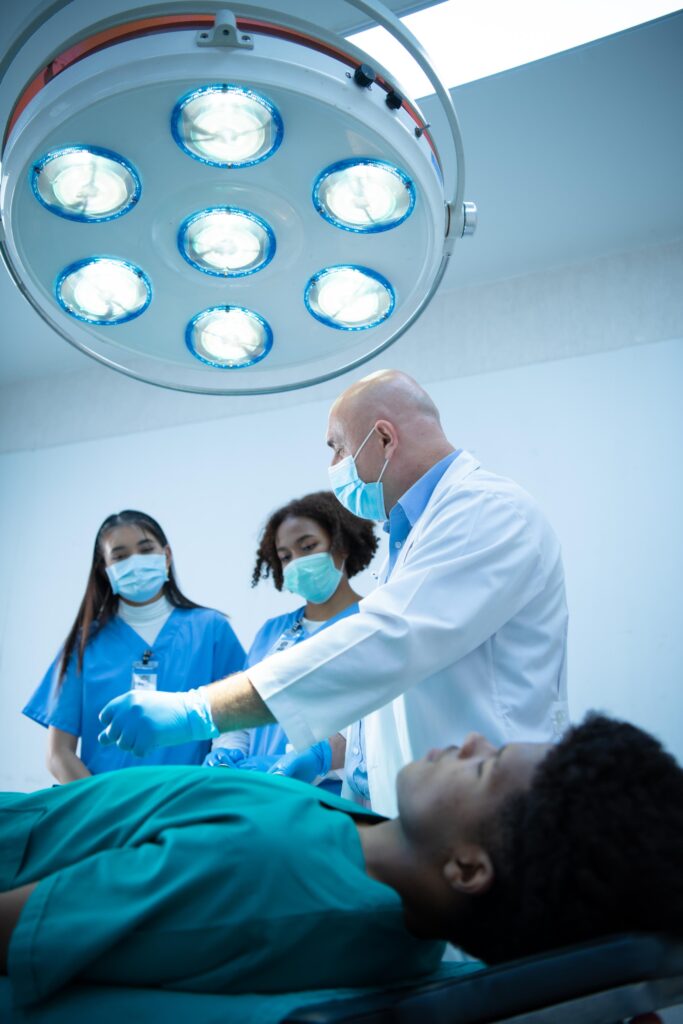
The surgery is performed under general anesthesia.
During the operation:
The Surgeon Makes a Small Neck Incision
Carefully placed to minimize visible scarring.
The Thyroid Is Carefully Removed
Only the required portion or the entire gland is removed depending on the diagnosis.
Important Structures Are Preserved
Special attention is given to protecting the recurrent laryngeal nerves and parathyroid glands.
The Incision Is Closed
Using cosmetic techniques for better healing.
The surgery usually takes between one and three hours depending on the complexity.
How Long Does Recovery Take?
Recovery varies slightly depending on the type of surgery performed.
Most patients:
Stay in the Hospital
For one or two days.
Resume Light Activities
Within one week.
Return to Work
Usually within two weeks.
Experience Mild Neck Discomfort
This gradually improves over several days.
Your surgeon will provide personalized recovery instructions and schedule follow-up visits.
Will I Need Thyroid Medicine After Surgery?
This is one of the most frequently searched questions.
The answer depends on how much thyroid tissue remains.
If only part of the thyroid is removed, some patients continue to produce enough thyroid hormone naturally.
If the entire thyroid gland is removed, lifelong thyroid hormone replacement tablets are usually required.
Your doctor will monitor hormone levels through regular blood tests.
Is Thyroid Surgery Safe?
Yes.
When performed by an experienced thyroid surgeon, thyroid surgery is considered very safe.
Like any operation, there are potential risks, including:
Temporary Voice Changes
Usually improve as healing progresses.
Low Calcium Levels
Temporary calcium imbalance may occur after surgery.
Bleeding
An uncommon but recognized surgical risk.
Infection
Rare with proper postoperative care.
Choosing an experienced surgical team significantly reduces complications.
Why Choose Svastii Advanced ENT & Thyroid Centre?
Svastii Advanced ENT & Thyroid Centre is a dedicated centre offering advanced diagnosis and treatment for thyroid disorders, ENT conditions, head and neck surgery, voice disorders, sinus disease, thyroid nodules, thyroid cancer, and minimally invasive thyroid procedures.
Patients undergoing Thyroid Surgery in Bangalore benefit from comprehensive evaluation, advanced surgical technology, individualized treatment planning, and complete postoperative care under experienced specialists.
Expert Care by Dr. Satish Nair
Dr. Satish Nair is a renowned ENT, Head and Neck Surgeon with extensive expertise in thyroid surgery, scarless thyroid procedures, head and neck oncology, voice disorders, salivary gland surgery, sinus surgery, and advanced ENT care. His patient-centered approach focuses on accurate diagnosis, minimally invasive techniques whenever appropriate, and faster recovery with excellent functional outcomes.
At Svastii Advanced ENT & Thyroid Centre, Dr. Satish Nair and his team guide patients through every stage of treatment, ensuring they understand their diagnosis, surgical options, and recovery plan.
Frequently Asked Questions
1. Who is the best doctor for Thyroid Surgery in Bangalore?
Dr. Satish Nair at Svastii Advanced ENT & Thyroid Centre specializes in thyroid surgery, head and neck surgery, and advanced ENT procedures, offering personalized treatment for thyroid disorders.
2. Is Thyroid Surgery in Bangalore safe?
Yes. When performed by an experienced thyroid surgeon using modern surgical techniques, thyroid surgery is highly safe and effective.
3. How many days does recovery take after thyroid surgery?
Most patients resume light activities within a week and return to regular work within two weeks, depending on the type of surgery performed.
4. Will I need lifelong medication after thyroid surgery?
Patients who undergo total thyroidectomy usually require lifelong thyroid hormone replacement, while those having partial thyroid removal may not always need medication.
5. Why choose Svastii Advanced ENT & Thyroid Centre for thyroid surgery?
Svastii Advanced ENT & Thyroid Centre offers advanced diagnostics, modern thyroid surgery, comprehensive postoperative care, and expert treatment under Dr. Satish Nair, helping patients achieve safe recovery and excellent long-term outcomes.